
What is the hardness of a rubber ring?

As a long - standing rubber ring supplier, I've had numerous discussions with clients about the hardness of rubber rings. Understanding the concept of rubber ring hardness is crucial for both the production and application of these essential components.
What is Hardness in the Context of Rubber Rings?
Hardness is a fundamental property of rubber rings which refers to their resistance to indentation. It is a measure that helps us predict how a rubber ring will behave under different stresses and in various working environments. The most commonly used scale for measuring the hardness of rubber is the Shore Scale. There are different types of Shore Scales, but for rubber rings, the Shore A and Shore D scales are primarily used. The Shore A scale is used for softer rubber materials, while the Shore D scale is applied to harder rubber compounds.
A softer rubber ring, with a lower Shore A hardness value, is more flexible and can conform easily to irregular surfaces. This makes it ideal for applications where a tight seal is required on uneven mating parts. For example, in some plumbing systems with pipes that have minor surface imperfections, a softer rubber ring can effectively prevent leakage.
On the other hand, a harder rubber ring, with a higher Shore A or Shore D value, offers greater resistance to wear, abrasion, and deformation. These rings are often used in high - pressure or high - load applications. For instance, in a hydraulic cylinder, a hard rubber ring can withstand the high pressure exerted by the hydraulic fluid without losing its shape or functionality.
Factors Affecting the Hardness of Rubber Rings
Several factors influence the hardness of rubber rings during the manufacturing process.
Polymer Type
The choice of polymer is a significant determinant of rubber ring hardness. Different polymers have inherent characteristics that affect the final hardness of the ring. For example, natural rubber is generally softer. When used alone, it can produce rubber rings with relatively low Shore A values. On the contrary, polymers like polyurethane can be formulated to produce very hard rubber rings suitable for heavy - duty applications.
Filler Content
Fillers are additives added to rubber compounds to modify their properties. Carbon black is a commonly used filler in rubber ring production. Adding more carbon black to the rubber compound typically increases the hardness of the resulting rubber ring. This is because carbon black particles act as reinforcing agents, making the rubber more rigid and less deformable.
Cross - Linking Density
Cross - linking is a chemical process that bonds the polymer chains in the rubber together. A higher cross - linking density results in a harder rubber ring. During vulcanization, which is a common cross - linking process for rubber, the use of more sulfur (a common cross - linking agent) or other cross - linking chemicals can increase the number of cross - links between polymer chains, thereby increasing the hardness of the rubber ring.
Choosing the Right Hardness for Different Applications
Selecting the appropriate hardness for a rubber ring is essential to ensure its optimal performance in a specific application.
Sealing Applications
In most sealing applications, the goal is to prevent the leakage of fluids or gases. For static seals, where there is no relative motion between the mating surfaces, a softer rubber ring is often preferred. The softness allows the ring to compress easily and fill in any microscopic gaps between the surfaces, creating an effective seal. For example, in household appliances such as refrigerators or dishwashers, soft rubber O - rings are used to seal water and refrigerant lines.
However, in dynamic sealing applications, where there is relative motion between the surfaces, a harder rubber ring may be more suitable. The hardness provides better resistance to wear and tear caused by the movement. For instance, in automotive engines, hard rubber rings are used in piston seals to withstand the high - speed reciprocating motion of the pistons.
Mechanical Support Applications
When rubber rings are used for mechanical support, like in vibration dampening or as spacers, the hardness requirements depend on the amount of load they need to support. For light - load applications, a softer rubber ring can provide sufficient flexibility and shock absorption. In contrast, for heavy - load applications such as industrial machinery, a hard rubber ring is necessary to support the weight and prevent excessive compression.
Our Product Offering
At our company, we offer a wide range of rubber rings with different hardness levels to meet various customer needs. Whether you are looking for a soft rubber ring for a delicate sealing application or a hard rubber ring for a high - stress environment, we have the right product for you.
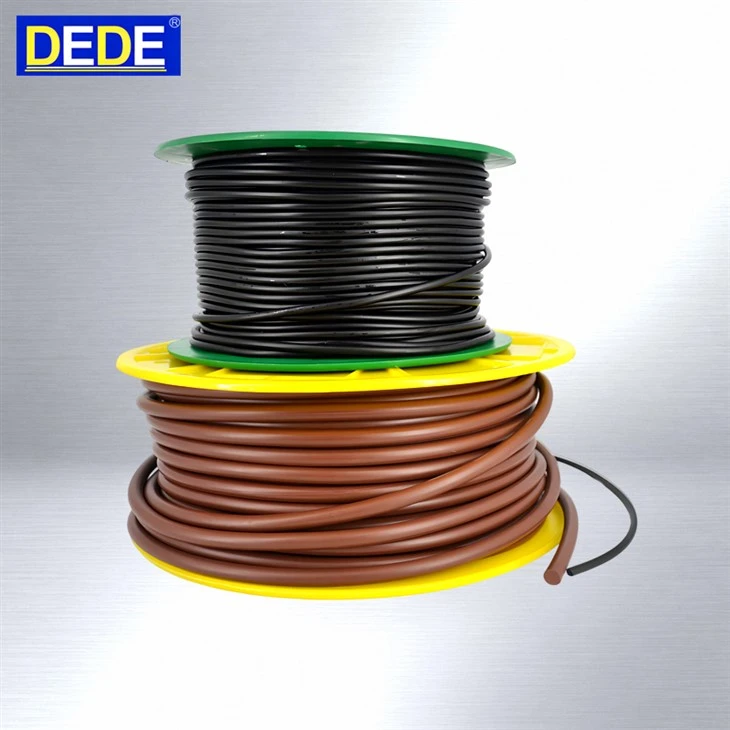
We have an extensive selection, including O Ring Strip, which can be cut to the desired length and is useful for creating custom - sized seals. Our O Ring Pack contains a variety of O - rings in different sizes and hardness levels, providing a convenient solution for multiple applications. The O Ring Cord Roll is a great option for those who need to make rings on - site, offering flexibility and cost - effectiveness. We also provide X Profile Ring, which has unique cross - sectional properties that can enhance sealing performance in certain applications. And our O Ring Assorted Box is a handy package for customers who need a range of O - rings for different projects.
Contact for Procurement
If you are in the market for rubber rings and have specific requirements regarding hardness, size, or application, we would love to hear from you. Our team of experts can help you choose the most suitable rubber rings for your needs. We are committed to providing high - quality products and excellent customer service. Reach out to us to start a discussion about your procurement needs.
References
- ASTM D2240 - Standard Test Method for Rubber Property - Durometer Hardness
- DeKoker, L. (2015). "Rubber Sealing Technology". Elsevier.
- Morton, M. (2001). "Rubber Technology". Kluwer Academic Publishers.